Can you change your brain?

Are people born smart, or can they become smart?  New science shows that we can do things every day that can actually change the structure and even the chemicals in our brain.

An example of this is a study done on London cab drivers.  The longer a person has been driving a taxi, the larger their hippocampus became, which is the part of the brain involved in spatial-visual memory.  The cab drivers brain literally expanded due to the cognitive demands of navigating London’s streets.

Here are some ways you can actually change and improve your brain:

Listening to music:  One study that was done performed EEGs (the test that measures brain waves) on patients who were listening to music.  The study found that when music was played, the brain had alpha brain waves, which puts the brain into an ideal condition to learn new information.  So listening to music can actually help your brain as you process new information.

Exercising:  Physical activity can improve memory and the ability to learn.  A study found that patients who have a period of  30 minutes of vigorous activity showed improved ability to learn new information, and showed an increase of endorphins in the brain (the chemical that makes us feel good).

Reading:  Volunteers had an fMRI (functional MRI of the brain) performed, then for everyday read 30 pages of a book and took a quiz.  They then had a repeat fMRI.  The repeat brain scan showed increased connectivity of the neurons in the temporal cortex of the brain, which  is associated with language comprehension.

Positive thoughts:  Studies have shown that positive thoughts alone can actually cause your brain to release neurotransmitters, the chemical messengers that control the body’s functions.  This neurotransmitter release can result in more energy, improved immune system function, and reduced anxiety.   For example, when someone consciously practices gratitude, their brain releases a surge of the neurotransmitter dopamine.  This results in increased alertness and cognitive function of the brain.
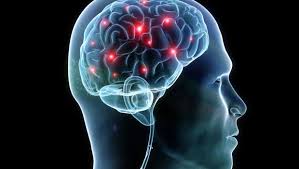
brain.jpeg

How can Alexa help the disabled?

We’ve all heard about the Amazon smart speaker, Alexa. How is Alexa helping the disabled?

While Alexa is a fun novelty for the average person who wants a recipe or wants a song to play, Alexa is being used by the disabled for tasks they can’t complete on their own. This is providing the disabled with independence they have never had before.

For disabled individuals who can’t move their hands, tasks such as ordering groceries and making their own doctor’s appointment is now a possibility with Alexa.

The Alexa is also more affordable than many medical technologies for the disabled. The Alexa is about $180, and about $50 for the smaller Dot device, and these reasonable prices have allowed those with limited income to access these devices.

What services can Alexa provide for the disabled?

-Reading audio books for those with visual disabilities on inability to hold a book

-Turning the lights on and off

-Purchasing items from Amazon for delivery

-Adjusting the thermostat, which is especially important for those with spinal cord injuries who can’t regulate body temperature

-Accessing the news to stay in touch

-Setting up Google calendar for reminders on doctor’s appointments

alexa.jpeg

Can you make the diagnosis?

Noah’s family is headed to the playground, and Noah is very excited.  Noah, age two, keeps running ahead, and his mom grabs his arm to pull him away from the busy street.

When his mom grabs his arm, Noah screams and holds his elbow.  He continues to complain of pain, and will not move his arm at all.

What does Noah have?

  1.  An elbow fracture
  2.  A nerve injury
  3.  Nothing, he is just being dramatic
  4.  Nursemaid’s elbow


If you guessed 4.  Nursemaid’s elbow, you are correct.

Nursemaid elbow is a common elbow injury, especially among children under age 5.  It occurs when a child’s elbow is pulled and one of the bones partially dislocates.

This injury was named during a time when nursemaids (nannies) cared for children and had the reputation of causing this injury by pulling on a child’s outstretched arm.

The bones and ligaments of a young child are soft and still developing. This makes it easy to sustain injuries of this type. Typically, nursemaid elbow is found in children between the ages of 1 to 4, but can be found in slightly older children as well.

This injury can be easily reduced by a physician with the bone put back in place.

nursemaids

While a fracture must be considered, there was no significant trauma that would likely result in a fracture.  A nerve injury would be very unusual without significant trauma.  While two-year-olds can be dramatic, a child who will not move their arm must be thoroughly evaluated.

Which kills more people, sharks or jellyfish?

Jellyfish are beautiful sea creatures that are found all over the world, from shallow waters to the deep sea.  But these beautiful creatures cause many deaths every year.

Every year there are 150 million jellyfish stings worldwide.  Sharks kill 8-10 people a year in the world, but jellyfish kill 50 people annually!

Jellyfish are armed with nematocysts that can pierce skin and inject venom.  This can result in a range of effects from mild discomfort, to painful reactions, and even death.

If someone sustains a jellyfish sting,  salt water should be poured over the affected area.  Vinegar has also been proposed but is controversial.  (The use of alcohol,  ammonia, fresh water, or urine are old wives tales and can cause increased venom release!)   Do NOT try to scrape away the tentacles, which can cause release of more venom and can be fatal.

Hydrocortisone cream applied to the area can be helpful, and taking antihistamines (Benadryl) can help.   Applying heat to the area can be beneficial.  If the person who is stung has shortness of breath then call 911.

Jellyfish sting:

jellyfish.jpeg

The man who invented insulin for free

Frederick Banting was awarded the Nobel Prize for the invention of insulin along with his colleague,  Charles Best, in 1923.

Frederick Banting was born in a small farm town in Canada.  He attended Victoria college, where he flunked out his first year!  Despite that, he was accepted into medical school.  After medical school, he attempted to join the army, but they initially refused him due to his poor eyesight.  He tried again however and was accepted.

In the military, he sustained serious injuries during battle, but assisted other injured soldiers and was awarded the Military Cross.

Dr. Banting then completed medical residency in Canada, but the hospital he was at did not want to hire him.  He moved to London, where he opened a practice which was not successful.

Dr. Banting read an article about the pancreas, and about a new thought at the time that the pancreas may be the organ that produced insulin.  As we know now, insulin is a hormone that helps the liver, fat and muscle absorb glucose from the blood. Diabetic patients cannot make enough insulin, and in those days a patient with diabetes was put onto a hospital ward until they died, as there was no treatment.

Dr. Banting and his student Charles Best became obsessed with finding out how to isolate insulin, and hit upon the idea of extracting insulin from the pancreas of cows and pigs.

Dr. Banting and Charles Best won the Nobel Prize for Medicine in 1923.

The team of scientists sold the patent for insulin to the University of Toronto for $1 to ensure that it would be available for all diabetic patients.   The University then gave the patent to pharmaceutical companies for free!

Despite that, there are now no low priced generic insulin products on the market.  In the past,  pharmaceutical companies were even charged with a price-fixing scheme, but it had little impact, and insulin continues to be a billion dollar industry.   In the last ten years, insulin prices have soared from $100–$200 per month to $400–$500 a month.

Dr. Frederick Banting:

220px-Fredrick_banting

Can you make the diagnosis?


Max is usually a happy two-year-old, but this morning his parents note he hasn’t eaten as much as usual, and he seems tired.  They put him down for an early nap.  When he wakes up several hours later, he feels feverish, and his mom sees that he has a rash:

chickenpox.jpeg

What does Max have?

  1.  Allergic Reaction
  2.  Chickenpox
  3.  Measles
  4.  Bug bites


If you guessed 2.  Chickenpox, you are correct!

Chickenpox is an infection caused by the varicella-zoster virus.  It causes a rash with small, fluid-filled blisters.   The rash starts 10-21 days after exposure to the virus, and lasts for 5-10 days.  New bumps come on over several days, and then crust over. Chickenpox is also associated with fever, decreased appetite, headache, and fatigue.

Chickenpox is usually a mild disease.  In some cases it can have complications such as  bacterial infection of the skin, dehydration, or pneumonia.  Chickenpox can cause serious problems in women who are pregnant and people with immune system problems.  There is a vaccine that prevents 98% of chickenpox infections.

Allergic reactions can cause a rash, but it is usually looks like hives.  Measles rash is usually more patchy and red, and doesn’t have the white bump of chickenpox.  Bug bites usually have a central area that can be identified as an insect bite.


How much more expensive is the ER compared to Urgent Care?

We all know that for significant symptoms such as chest pain or difficulty breathing, a patient should go to the Emergency Department.  But ER visits are expensive, averaging $1200 per visit.  In the United States, $47 billion total is spent for Emergency Department visits per year!

But for minor complaints, how does a visit to the Urgent Care compare for costs?

The average cost for a visit to the ER for bronchitis is $595.  At an Urgent Care it would be $127.

If a patient goes to the ER for an earache, the average cost would be $400.  At an Urgent Care it would be $110.

For a urinary tract infection,  the average cost at an ER would be $665.  At an Urgent Care it would be $112.

ER.jpeg

Can donating blood make YOU healthier?

In the United States, someone needs a blood transfusion every 2 seconds.  There are 41,000 blood donations needed per day.

But what about the people who donate blood?  Do they get any benefit?

Studies have shown that blood donors are 88% less likely to have a heart attack!   This is thought to be due to the fact that donating blood appears to decrease the viscosity, or resistance to flow, of the blood and therefore donors are less likely to develop blockages.

Blood donors are less likely to be hospitalized, and if they are, they have shorter lengths of hospital stays.

When you donate blood, you get a mini physical, as you get your temperature, pulse, and blood pressure checked.

Blood donations are tested for 13 different diseases, and if anything is positive, the donor will be notified immediately.  Of course, if a person knows they have an infectious disease, they should not donate blood.

Another benefit is that when you donate blood, your  body has to burn calories to produce new blood.  When you donate one pint of blood, you burn 650 calories!

But the most important reason to donate blood is that donating a single time can save up to three lives!

blood

Can you make the diagnosis?

Emily’s mom wakes up in the middle of the night.  She can hear her daughter Emily coughing in the next room, with a barking type of cough.  Emily, who is 2-years-old, has had a cold the last few days.  Emily starts crying, so her mom goes to check on her.

Emily is fussy and feels feverish.  Her coughing continues, and it looks like she is working to breathe.

Concerned, Emily’s mom decides to take her to the Emergency Department.

What does Emily have?

  1.  Pneumonia
  2.  Bronchitis
  3.  Croup
  4.  Allergic reaction


If you guessed 3.  Croup, you are correct!

Croup is a viral infection of the upper airway, and causes a barking-type cough.   Croup causes swelling around the upper airways.  Croup is most common in children younger than 5.  Other symptoms associated with croup include fever, hoarse voice, and noisy breathing.  Symptoms are usually worse at night time.

Croup can be treated at home in many situations, with humidified air, fever reduction, and giving the child fluids.  However if the child has severe symptoms such as noisy or labored breathing, drooling, seems either agitated or fatigued, has skin color changes such as glue or grayish tone, or can not take fluids by mouth then they must be seen medically.  Treatment can include humidified breathing treatments, steroids, and in some situations epinephrine which is also given as a breathing treatment.

Bronchitis, which is inflammation of the lung passages, is a possibility, as it is often associated with cold symptoms.  However bronchitis does not usually have the barking cough associated with croup.  Pneumonia is also a possibility, and can be diagnosed by physical exam, as congestion in the lungs can be heard with a stethoscope, or identified on a chest x-ray.  Allergic reaction is less likely in this case, as Emily’s cough is associated with a cold, she has a fever, and she does not have a rash.

croup.jpeg


How long does it take to get elective surgery in other countries?

Yesterday’s blog was about how much health care cost in different countries.

Below is a comparison of wait time in other countries for a standard elective surgery, hip replacement.  Hip replacement surgery is typically performed for patients with arthritis who develop pain in their hip joint.  The time given below is from when it is decided surgery is needed to the surgery date performed:

United States:  4 weeks

Netherlands:  7 weeks

Sweden:  4-8 weeks

United Kingdom:  12 weeks

Australia:  14 weeks

Finland:  16 weeks

Denmark:  58 weeks

Canada:  78 weeks

waiting room