How much do people pay for health care in other countries?

Many countries have universal health care plans, essentially “Medicare for All” for their citizens.  How much do people pay in those countries for health care separate from the amount financed by the government from taxes?  Here are a few examples of how much people pay for their health care in countries with universal health care plans:

Netherlands:  People in the Netherlands are required to buy private insurance or pay a fine.  They chose between plans on the national marketplace.  Financing is shared between individuals and their employers.   The average Dutch citizen pays $115 to $150 per month in premiums.   Copayments are capped at $475 per year.   Approximately 40% of the Dutch receive tax subsidies to purchase their insurance.   The average out-of-pocket expense in the Netherlands is $605 per year.  Immigrants:  Undocumented migrants are not covered and are excluded from coverage.

Denmark:   Denmark has universal coverage.  Services are covered by an 8% tax on income.   Private health plans cover additional services and 1.5 million people purchase private coverage.   There are copays for dental care for adults, prescriptions, and eyeglasses.  Out-of-pocket expenses are capped at $3,775 per year.   Immigrants:  Emergency care is covered, but immigrants must pay for non-emergency health care.

Switzerland:  People in Switzerland are required to buy private insurance or pay a fine.  The Swiss pay the entirety of their plan costs, and children require the purchase of a separate plan. The Swiss have a regional insurance marketplace.  The average Swiss citizen pays $385 per month in premiums.   The average Swiss citizen pays copayments for all services up to their deductible which they choose (between $248 and $2,065).  After the deductible is met, the Swiss pay a 10-20% coinsurance on all services, capped at $579 per year. The average out-of-pocket expense in Switzerland is $2,313 per year. Immigrants:  Switzerland does not pay health care costs for illegal immigrants, and any service received must be paid for up front.

Sweden:  Sweden has universal coverage which is paid for by income taxes.  Prescription drugs are not covered and individuals pay the full cost of their prescribed medication.  Out-of-pocket spend is capped at $120 per year for health care visits, $120 per year for prescriptions, and $330 per year for dental.    Immigrants:  Not covered by health care services.

Norway:  Virtually all of Norway’s healthcare cost are covered by the government through taxes.  Norwegians pay $17 for primary care visit, $39 for specialist visit, and $51 for prescription drugs.  Total annual out-of-pocket expense is capped at $221 per year. Immigrants:  Not covered by health care services other than emergency care.

United Kingdom:  The National Health Service is funded by national taxes. Coverage is universal.  Patients pay a portion of their prescription drug costs.  Ten percent of citizens have private health policies, which offers more rapid and convenient access to care.  Out-of-pocket expenditure on healthcare by households accounted for 14.8 percent of total expenditures in the U.K.  Immigrants:  The National Health Services does not provide health care to undocumented immigrants.

Australia:  Australia has a universal health care system that is funded by taxes.  The health plan covers 100% to see a general practitioner, 85% for a specialist, and 75% of the charges at a private hospital.   About 50% of the population also has additional private health insurance.  For Australians who don’t take out a policy, there is a 2 percent premium surcharge for each year they go uncovered.  Out-of-pocket payments accounted for 18 percent of total health expenditures and are for dental, medical equipment, and medications.  Undocumented immigrants do not have health care coverage.

Canada:  Canada has universal health care.   The program is covered by taxes.   However most Canadians also buy private medical insurance to provide access to private hospitals and to hospitals in the United States.  Out-of-pocket spend for patients is about 14% of total healthcare spending and is necessary for prescription drugs, dental care, and vision care.  Immigrants:  Immigrant healthcare is not covered.  Immigrants  to Canada must pass a “health screening” that confirms they do not have a pre-existing condition that will likely exceed $20,000 in annual expenditure.  If the immigrant does have such a condition, they are denied permanently from coverage.
country


Can you make the diagnosis?

Steve is excited to arrive in Winter Park, Colorado for his ski trip.  He is meeting his old college friends for the weekend.

Steve and his friends meet up for lunch, then take a walk through the town.  However soon Steve  begins to feel tired, and starts to think he may be getting the flu.  He has a headache, and starts to feel nauseated.  He begins to feel dizzy, and decides he has to go back to his hotel room and go to bed.

What is causing Steve’s illness?

  1.  Altitude sickness
  2. The flu
  3. Food poisoning
  4. A migraine


If you guessed 1.  Altitude sickness, you are correct!  Altitude sickness is caused by low oxygen at high elevations.  Symptoms include headaches, vomiting, fatigue, and dizziness.  Altitude sickness can progress to pulmonary edema (fluid in the lungs) and to high altitude cerebral edema (brain swelling), and if untreated can lead to death.

Altitude sickness can occur at altitudes above 8000 feet.  Risk factors include a prior episode of altitude illness, and rapid ascent to elevation.  Alcohol and sleeping pills can increase the risk for altitude sickness.

Slow ascent to elevations can prevent altitude illness.  There is a medication called Diamox which can help prevent altitude sickness as well if it is started early.

Altitude sickness can mimic the flu, but the clue on this case is that Steve is at Winter Park, Colorado, which has an altitude of over 9000 feet.  Food poisoning usually causes vomiting and diarrhea.  A migraine causes severe headache and is often associated with visual changes.


winter

Why do we fart more on an airplane?

What changes happen to our body when we are traveling on a plane?

Traveling on a plane at 35,000 feet is the equivalent of being on an 8000 foot mountain.  At the same time, the humidity is on a plane is lower than being in the desert!

Here are some of the changes that occur to our body when we fly:

-The reduced air pressure decreases our oxygen level by 6-25%.  For healthy passengers this is not a problem, but can cause difficulty for those with lung or heart problems, as well as the elderly.

-Our vision can be affected by the reduced oxygen level, causing our eyes to feel strained.

-The sensitivity of our taste buds decreases by up to 30% due to the low air pressure and low humidity on the flight.

-Our sense of smell also decreases, which can cause food to taste bland.

-The change in air pressure can cause increased flatulence (farting).  When we fly, the gases in our digestive system expands by 30%, resulting in this problem. Planes often have charcoal filters to reduce the odors.

-Our skin dries out by 37% from its baseline, which leads to itchiness.

-Studies have shown that our immune system can be affected by the change in air pressure, making it more likely for us to become sick after flying.  In addition the re-circulated area spreads bacteria and viruses throughout the plane.

fart.jpeg


What percentage of people don’t wash their hands after they use the bathroom?

After using the bathroom, 10% of people don’t wash their hands at all!

Studies have shown that 15% of men and 7% of women don’t wash their hands after using the toilet.

For those who do wash, 33% don’t use soap.

It’s even worse for school students age 8-17, as researchers found that 89% don’t wash their hands.

Because of the lack of hand washing, researchers have found that that the doorknobs of bathrooms harbor such bacteria as streptococcus, staphylococcus, E. coli, salmonella, and campylobacter

So what can you do to prevent infection in a public bathroom?  After washing your hands, use a paper towel to open the door when you exit.  If possible in an office setting or public building, the housekeeping staff should frequently wash the doorknobs to prevent the spread of infection.

hand


Can you make the diagnosis?

Robert is supposed to go out with his friend for dinner, but he feels a bit under the weather, so he calls and says he has to cancel.  He feels like he is getting the flu.  He had a headache and feels feverish.

Robert decides just to take some Advil and get into bed.  His friend who he cancelled dinner with decides to swing by just to check on him.  It is hard for Robert to get out of bed, but he lets him in.  He tells his friend how badly he feels, and shows him a rash he is getting.

meningococcus

What should Robert’s friend tell him to do?

  1.  Take more Advil and go to bed
  2.  Make an appointment with his doctor
  3.  Take a Benadryl
  4.  Go to the Emergency Department


If you guessed 4.  Go to the Emergency Department, you are right!

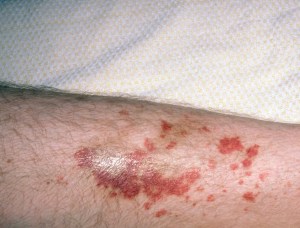
Robert has meningococcal infection.  Meningococcal disease is caused by the bacterium Neisseria meningitidis.  This infection can lead to severe illness and death if untreated.

Symptoms include fever, headache, neck stiffness and a purple rash.

There are 2,600 cases of meningococccal infection a year in the United States.  It has been reduced with vaccination against the infection.

If caught early, meningococcal disease can be treated successfully with antibiotics.

Advil may help the fever and pain, but Robert has a severe bacterial infection.  It cannot wait for treatment, and he should not wait to see his doctor for a regular appointment.  Benadryl can help allergic rashes, but this rash is from bacteria.

Does tryptophan really make you sleepy on Thanksgiving?

We often hear that it is the tryptophan in turkey that makes us sleepy on Thanksgiving, however turkey actually has the same amount of tryptophan as chicken, and less than many other foods such as eggs, cheese, or even sunflower seeds!

Tryptophan is an amino acid that is present in proteins.  Tryptophan is considered an essential amino acid, as we have to have it to sustain life.

Tryptophan is found in many foods such as poultry,  chocolate, milk, yogurt, cheese, eggs, and nuts.

So why do we get sleepy on Thanksgiving?  Any big meal that contains tryptophan and lots of carbohydrates can make us sleepy, not just turkey.  Also, the combination of taking a break from hard work, as well as alcohol, are likely contributing factors.

tryptophan.jpeg


How many calories does the average person eat on Thanksgiving?

The average American eats 4500 calories and 229 grams of fat on Thanksgiving day.

Here’s the breakdown on some of our favorites:

Bread stuffing, 1 cup – 350 calories

Turkey, 4 slices – 320 calories

Gravy, 1/2 cup – 100 calories

Mashed Potatoes, 1 cup – 237 calories

Green bean casserole, 1 cup – 350 calories

Cranberry Sauce,  1/4 cup – 110 calories

Biscuits, 2 – 340 calories

Sweet potatoes, 1 cup – 285 calories

Pumpkin pie, 1 slide – 320 calories

thanksgiving

Can you make the diagnosis?

Jeremy checks into the Emergency Department for left shoulder pain.  He tells the triage nurse that his shoulder started hurting that morning.  He had been riding his bike to work and hit a pothole.  He thinks his stomach hit the handlebars before he hit the ground.

What should the triage nurse do?

  1.  Tell Jeremy that the E.R. is really busy, it will be a couple hour wait to be seen.
  2.  Triage Jeremy as a high priority, he may have a signficant intra-abdominal injury


If you guessed 2. Triage Jeremy as a high priority, you are right!

When a patient has a history of a trauma or injury to the abdomen, and then complains of left shoulder pain, it can be from  “referred pain”, due to the innervation of the abdominal organs.  The referred nerve pain causes the left shoulder to hurt even though the shoulder is not injured.

In this case, Jeremy has a ruptured spleen.  It is common from patients with a ruptured spleen from trauma to complain of left shoulder pain due to referred pain.  Most patients will also have abdominal pain when examined.

When a spleen ruptures, it is an emergency.  While some patients can be managed non-surgically, there are also cases that result in significant bleeding and must be treated with a surgery.

Ruptured spleen that has been removed at surgery:

spleen


How long will drugs show up on a urine test?

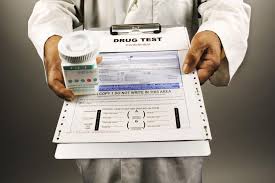
Many jobs require drug testing for future or current employees.  How long do common drugs stay in our system?  Here are some common drugs and the average duration that they can be found on testing:

Alcohol:  3-5 days in urine, 90 days in hair

Meth:  1-3 days in urine, 90 days in hair

Cocaine:  2-4 days in urine, up to a year on hair

Benzodiazepines (valium, Xanax, etc):  10 days in urine, 90 days on hair

Morphine:  2-3 days in urine, 90 days on hair

Heroin:  3-4 days in urine, 90 days on hair

Methadone: 3-4 days in urine, 90 days on hair

Marijuana:  7-30 days in urine, 90 days in hair

drug.jpeg


Is watching the news making you physically sick?

Can watching the news make you sick? 

The average American spends 70 minutes a day getting the news!  Thirty four percent of people go online to read the news every day.  Thirty nine percent of people watch news on TV every day.  Forty four percent say they get news through their mobile phone.   

 But what is the effect of all of that news on our brains?

News can trigger our brain’s limbic system, which then releases cortisol. Cortisol is released when we are in a state of stress, and can affect our immune system.  Chronic stress with high cortisol levels can impair digestion, make us susceptible to infection, and impair hair growth!

Researchers in Canada found that our comprehension declines based on the number of news stories we are exposed to.  The researchers believe that the constant barrage of interruptions from short news stories are distracting to our brains, and can impair concentration and memory.

Researchers in California found that when Americans watched more than four hours a day of news were more likely to report post-traumatic stress symptoms (PTSD).

news